Greetings from the South Asia Collective! We are a network of human rights activists and organisations from across South Asia. We’ve been working since 2015 to document the condition of the region’s minorities, and to help develop capacity among grassroots-level organisations focused on human and minority rights.

We are pleased to bring to you the 13th edition (2024/3) of our Online Bulletin, where we provide an overview of recent human rights violations against South Asia’s minorities, and news of other minority-related developments. This edition covers the period between September and December, 2024.

Our Bulletins are put together by research and documentation team from Afghanistan, Bangladesh, India, Myanmar, Nepal, Pakistan, and Sri Lanka.

We have been reporting on developments related to key rights enshrined in International Human Rights Law (IHRL), encompassing civil & political rights, as well as economic, social & cultural rights, and closely monitor the various abuses and violations against minorities in South Asia. Our reporting and presentation will be guided by IHRL.

While our primary focus is on religious minorities (and micro-minorities), our teams will also cover ethnic, caste, gender, and sexual minorities, as well as indigenous peoples. The Bulletins utilise mostly secondary sources of data. These include international and domestic media outlets, as well as other civil society-led documentation efforts. Occasionally we use primary sources, using interviews with victim, witnesses, and other relevant individuals. Although updates from these sources undergo internal verification, we do not disclose their details due to security reasons.

In a region where the bulk of targeted violence incidents go unreported, our Bulletins are not intended to provide an exhaustive list of violations. Our aim is to establish a record, draw out patterns, highlight trends, and contribute to processes aimed at awareness, prevention, and accountability.

Previous bulletins are available here.

Highlights of the period under review

Links to the country sections: Afghanistan, Bangladesh, India, Myanmar, Nepal, Sri Lanka

During the period under review, (September to December 2024) a range of violations of physical integrity rights, individual liberties, and social, cultural and economic rights across the region, particularly affecting religious, ethnic, and gender minorities, were reported. Amidst widespread discrimination, violence, and state-led repression in Afghanistan, Bangladesh, India, Nepal, and Sri Lanka, this bulletin also outlines few positive developments. Following are the highlights of the bulletin.

Physical integrity rights

Violation of physical integrity rights in the region were evident in persistent discrimination and violence against minorities, often fuelled by state and non-state actors. Afghanistan under Taliban regime witnessed public floggings and continued arbitrary detention, particularly against journalists, human-rights defenders, and religious minorities. Advocates of women rights and minority groups, particularly Hazaras, faced severe persecution. Similarly, in Bangladesh, Ahmadiyya Muslims and Hindus faced arbitrary arrests, where the physical integrity and human rights of religious minorities are threatened through the use of state power. While police brutality against minorities remained widespread in India, anti-minority targeting by Hindutva actors, especially during religious festivals, further fuelled violence. Hate crimes, communal violence, arbitrary detention and arbitrary deprivation of life were rampant in India. Myanmar witnessed deadly airstrikes, bombings, and artillery attacks, killing hundreds of civilians and displacing thousands. Transgenders and Dalits faced severe discrimination in Nepal, often being pressurised to withdraw complaints to maintain social harmony. Although, we were unable to cover the detailed developments from Pakistan, there has been a troubling rise in religious intolerance and violence linked to blasphemy accusations in the month of September. Incidents include the killing of Syed Khan, a blasphemy suspect shot by police in Quetta, and the death of Dr Shah Nawaz in police encounter after he surrendered. Both cases reflect the escalating risks faced by blasphemy accused, often resulting in extrajudicial killings. Educationists and rights activists have highlighted growing religious intolerance, and the harmful impact of hate content in education and emphasised greater political inclusiveness for religious minorities to combat these issues. Sri Lanka’s use of Prevention of Terrorism Act (PTA) encouraged arbitrary detentions often targeting human-rights defenders. In addition, lack of accountability for perpetrators, whether state or non-state actors, politician’s use of exclusionary rhetoric, further exacerbating the marginalisation, and weak enforcement of legal protection were the common issues across the region, highlighting a broader trend of state-led oppression and societal marginalisation.

Individual liberties

Recent developments across the region underscore alarming trends in the protection of individual liberties. Afghanistan’s escalating repression of freedom of assembly, expression, and association is reflected in Taliban’s enforcement of strict moral codes, restricting social and cultural gathering. Targeted repression, such as unexplained poisoning at religious school, shows a broader insecurity. While incidents of temple vandalism and attacks, land disputes, and violent protests related to religious identity were reported from Bangladesh, India’s stringent anti-conversion and cow protection laws have continued to target Muslims and Christians particularly, with numerous prosecutions reported in Uttar Pradesh. Tensions have escalated in India also due to attacks on mosques and legal challenges to the ownership of these properties. Similarly, continued call for a Hindu nation and abolition of secularism has fuelled religious polarisation in Nepal. Consistent pattern of rising religious intolerance has intensified the religious minority’s vulnerability to violence, persecution, and marginalisation, particularly in Afghanistan, Bangladesh, and India.

Discrimination in access to economic, social and cultural rights

Violation of economic, social, and cultural rights are persistently affecting ethnic and religious minorities across the region. Taliban’s continued harsh restrictions on women’s rights, limiting their access to education and professional opportunities reflect gender-based discrimination and systemic exclusion in Afghanistan. Similarly, cultural suppression and violation of minority’s social, cultural, and economic rights were seen in language restrictions and seizing of books that contradict their ideology, with particular targets being texts related to Shia Islam. While notable drop in Hindu representation in civil service exam result was reported from Bangladesh, reflecting institutional discrimination, arbitrary home demolitions, targeted harassment in public were found in India to be exacerbated by policies that fuel anti-Muslim discrimination. In Myanmar, the enforcement of a military conscription law has caused widespread migration, labour shortages, and increased child labour, worsening the country’s economic crisis. Nepal’s deep-rooted caste-based discrimination was reflected in deprivation of Dalits in access to basic services compared to non-Dalits. On the other hand, minority groups particularly, Malaiyaha Tamils, were affected in Sri Lanka because of the persistent ethnic and social marginalisation. This group continued to face neglect despite political promises, regarding land rights and tenuous land ownership in the plantation sector. Moreover, women in Sri Lanka working in tea estates were subjected to poor living conditions and harassment. The indigenous Vedda community’s struggle for access to forest and their traditional ways of life, also highlights the broader cultural and livelihood issues.

Other major developments

In Afghanistan, women and minority group’s basic rights are threatened with the Taliban’s oppressive policies as seen in the reports of escalating violence from Islamic State-Khorasan Province (ISIS-K) and persecution of the Hazaras. Despite international calls for accountability in addressing these abuses, there has been little progress. The political turmoil in Bangladesh combined with propaganda efforts, especially from across India, exacerbated the ethnic and religious differences, misrepresenting the political unrest. The situation was not any different in Sri Lanka, where lack of Muslim representation in the cabinet and the debate over Muslim Marriage and Divorce Act persisted. Despite this, however, Sri Lanka has witnessed an improvement regarding the political involvement and representation of women and members of the LGBTQIA+ community such as a new politician committing to transgender rights. Meanwhile, communities belonging to indigenous groups in Nepal have been continually demonstrating against the construction of a cable car in their sacred ancestral lands, fearing environment and cultural harm, which has caused the frequent clashes in the area.

The struggles for political representation, cultural preservation, and human rights were seen across the region, underscoring the need for greater accountability, inclusive governance, and the protection of religious and gender minority and indigenous ethnic groups.

Other announcements

The 2024 edition of SAC’s flagship annual South Asia State of Minorities (SASoM) Report will examine Economic, Political and Social Participation of Minorities in South Asia. The report will contain chapters from Afghanistan, Bangladesh, India, Myanmar, Nepal, Pakistan, and Sri Lanka. Ahead of the launch of the report, scheduled for March 2025, SAC is exploring interventions focusing on justice and accountability on one hand and promoting dialogue and diversity among stakeholders on the other. Organisations and individuals seeking to collaborate with us towards these efforts are requested to email us at sac@thesouthasiacollective.org with suggestions and proposals.

SAC published a statement condemning the grave human rights violations of religious minorities in Bangladesh and the spread of misinformation and disinformation, following the political unrest. The statement is available here.

SAC also published a joint statement denouncing violence, hate speech, and discrimination against minorities in South Asia, in a year when elections are taking place in several countries. The statement is available here.

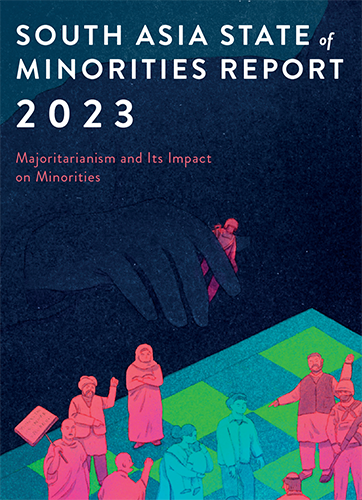
The 2023 edition of the SASoM Report remains available for free download here. The recording of the launch event is available here. The report focused on Majoritarianism and Its Impact on South Asian Minorities.
Happy reading!

The South Asia Collective team

During the period under review, the human rights situation in Afghanistan, particularly for minorities, continued to deteriorate under Taliban rule. Ethnic and religious minorities, especially Hazara Shias and Sufis, faced targeted violence, with Islamic State-Khorasan Province (ISIS-K) attacks resulting in civilian deaths, including the massacre of Hazara Shias. The Taliban’s discriminatory policies were evident in their restrictions on minority language celebrations, like the Uzbek Language Day, and their continued suppression of religious practices, such as banning Sufi gatherings. Additionally, the Taliban’s systemic marginalisation of women, including barring female students from medical institutes and detaining activists, compounded the oppression faced by minority groups. The international community, including human rights organisations and governments, condemned the abuses but struggled to implement effective measures for accountability.

Physical integrity rights

Arbitrary deprivation of life

  • 21 November 2024: A gunman opened fire on a group of Sufis at a shrine in Baghlan province, northern Afghanistan, killing 10 people. The attack took place at the Sayed Pacha Agha shrine in Nahrin district, where worshippers had gathered for their weekly ritual. According to Acting Interior Ministry spokesperson, the assailant targeted the group while they were engaged in a Sufi chant. United Nations Assistance Mission in Afghanistan (UNAMA) condemned the armed attack against a Sufi place of worship in Baghlan Province. UNAMA urges de facto authorities fully investigate the incident, prevent future attacks and ensure communities are protected.

Arbitrary arrest

  • 5 October 2024: Mahdi Ansari, a journalist with the Afghan News Agency in Kabul, went missing. Sources close to him allege that he was detained by Taliban intelligence, though the group’s spokesperson denies this claim. Ansari disappeared after leaving his office in the Pul-e-Khushk area of Kabul, prompting his family and friends to search for him at various Taliban police stations. Ansari, who has been working with the agency for two years, had previously faced temporary detention by Taliban police but had not reported recent threats.
  • 2 November 2024: The Taliban detained two Shia clerics in Herat province, western Afghanistan, taking them to an undisclosed location. The arrested clerics are Mohammad Akbari, former head of the Ulema Council in Jibril district, and Mahram Hussain Azimi, imam of the Sayyid al-Shuhada Mosque. The reasons for their detention remain unknown, and Taliban authorities have not commented. Efforts by tribal elders and religious scholars to secure their release have so far been unsuccessful.
  • 16 November 2024: Taliban intelligence in Herat province have detained Abdul Qoddus Yasinzada, an education activist and founder of Resalat Private High School. Yasinzada remains in a Taliban intelligence centre with no explanation for his arrest. Despite efforts by community elders and his family to secure his release, there has been no progress, leaving his relatives deeply concerned about his safety. The Taliban has not disclosed any details about the activist’s detention, despite repeated assurances of his release.
  • 2 December 2024: Taliban intelligence detained two activists, Najib Watanyar and Izzatullah Rahimi, in Kabul for participating in a protest advocating for women’s rights and an end to the oppression of Hazaras in Afghanistan. The protest took place in the Dasht-e-Barchi area of western Kabul.

Torture, extrajudicial trials and public floggings 

  • 16 October 2024: The Taliban’s Supreme Court announced the public flogging of eight individuals, including four women, in Laghman and Kabul, as part of a surge in corporal punishments. Four people, including two women, were whipped publicly in Laghman following rulings from the Provincial Criminal Court. A man received 30 lashes and a two-year prison sentence for theft, while two women and a man were each flogged with 39 lashes for ‘illicit relations’ and ‘fleeing from home’. Among them, one was sentenced to six months in prison, and the others received three-year terms.
  • 20 October 2024: The Taliban’s Supreme Court announced the public flogging of four individuals, including two women, in Takhar and Logar provinces, as corporal punishments continue to rise. A man and a woman in Farkhar district, Takhar, were each sentenced to 39 lashes for adultery, with the punishment carried out publicly. The Taliban’s use of public corporal punishment has drawn widespread condemnation for violating human rights and due process.

Individual liberties

Assembly, association and expression

  • 10 October 2024: Around 100 students at a religious school in Samangan province, central Afghanistan, were poisoned. The incident occurred at Khana Sangi religious school in Dara-i-Sufi Payin district, and the affected students were taken to a local hospital for treatment, where they have since recovered. The cause of the poisoning remains unknown, and no further details have been provided.
  • 11 October 2024: The Taliban forces raided a wedding in Faizabad, Badakhshan Province, injuring two guests after music was played at the event. The victims, a 15-year-old girl and a 67-year-old man, were shot when the Taliban’s morality police opened fire, causing panic among attendees and forcing the ceremony to be postponed. A video of the incident shows women screaming as chaos erupted during the raid. Additionally, the groom was fined 30,000 Afghanis (approximately USD 450) for permitting music at the wedding.


Discrimination in access to economic, social and cultural rights

  • 3 December 2024: The Taliban has barred female students from attending medical institutes across Afghanistan, further restricting women’s rights in the country. The Ministry of Public Health verbally instructed medical institutions to inform female students to ‘remain home until further notice’. A recording obtained by news agencies shows an official from a medical institute advising female students not to attend classes. This decision marks the latest in a series of restrictions aimed at limiting women’s access to education and professional opportunities under Taliban rule.
  • 20 October 2024: Residents of Faryab Province gathered in Maymana to celebrate National Uzbek Language Day, emphasising concerns over linguistic discrimination under Taliban rule. This day, officially recognised by the previous government, marks the Uzbek language as one of Afghanistan’s official languages and was previously supported through media programming. However, since the Taliban’s return to power, observance of the day has faced restrictions, and the group has been criticised for discriminatory language policies, including requiring Uzbek and Turkish professors to prioritise translations into Pashto over promoting their native languages.
  • 27 October 2024: The Taliban in Daikundi province has intensified efforts to confiscate books they deem ‘banned’ for contradicting their ideological principles. Sayed Mustafa Saleh, head of the Information and Culture Department, stated that publications from the past two decades allegedly aimed to ‘alter the minds of the youth’ and undermine ‘Islamic principles and Afghan values’. This campaign is part of a broader crackdown, with similar operations in other provinces targeting libraries and educational institutions. The Ministry of Higher Education has also mandated the removal of materials conflicting with Hanafi jurisprudence, particularly texts associated with the Shia sect, from schools and private universities.

Other major developments

  • 13 December 2024: The Canadian Parliament’s Standing Committee on Foreign Affairs and International Development has officially recognised the historical massacre of Hazaras under Abdul Rahman Khan (1891–1893) and their continued persecution under the Taliban in Afghanistan. In its report ‘Enduring and Overcoming: The Struggle of the Hazaras in Afghanistan, the committee highlighted that Khan’s fatwa of jihad led to the extermination of an estimated 62 per cent of the Hazara population, with survivors dispossessed and enslaved. The report detailed the systemic sale of Hazara men, women and children as slaves in Kabul and Kandahar, with the state profiting from these transactions.
  • 10 October 2024: The United Nations Human Rights Council has extended Richard Bennett’s mandate as Special Rapporteur on human rights in Afghanistan for one year.
  • 11 October 2024: Amnesty International and Human Rights Watch (HRW) have criticised the UN Human Rights Council for failing to establish an independent accountability mechanism for Afghanistan in its October 10 resolution. While the resolution extended the UN Special Rapporteur’s mandate for another year and expressed concern over human rights violations, particularly against women and minorities, critics argue it does not go far enough to ensure justice. Amnesty International highlighted the need for an international mechanism to investigate, identify perpetrators, and address impunity for over 40 years of violations. Despite welcoming the Rapporteur’s extended mandate, both organisations lamented the council’s reluctance to take stronger measures to promote accountability for Afghanistan’s ongoing abuses.
  • 10 October 2024: Human Rights Watch (HRW) has reported that former Afghan policewomen face threats and harassment from the Taliban, forcing many into hiding, as well as abuse under the previous Afghan government, including unchecked sexual harassment and assault by male colleagues. In its report ‘Double Betrayal: Abuses Against Afghan Policewomen Past and Present’, HRW highlights that Taliban authorities intimidate ex-policewomen with phone calls, home searches and threats, while family members also subject them to abuse, viewing their past work as shameful.
  • 31 October 2024: A UN report by UN Women, International Organization for Migration(IOM) and United Nations Assistance Mission in Afghanistan (UNAMA) highlights the severe restrictions Afghan women face in accessing justice under the Taliban, rendering them vulnerable in a gender-unequal legal system. Based on consultations with 776 women across Afghanistan, the report reveals that 79 per cent of women had no contact with formal legal services in the past year due to barriers such as the Taliban’s requirement for a male guardian to access courts. Women seeking justice for issues like domestic violence, divorce and inheritance disputes often find their cases dismissed or ignored entirely, underscoring the systemic marginalisation of women under the current regime.
  • 31 October 2024: UNAMA Quarterly Update reports that ISIS-K attacks in Afghanistan between July and September 2024 killed at least 28 civilians and injured 50 more. The group claimed responsibility for four attacks during this period, including two targeting Hazaras. Notable incidents included an August attack in western Kabul and Nangarhar, which left seven civilians dead, and on 2 September bombing outside a Taliban office in Kabul that killed seven and injured 29. The deadliest attack occurred on 12 September, when ISIS-K militants killed 14 Hazara passengers on the Ghor-Daikundi border. Despite Taliban attempts to minimise ISIS-K’s threat, the group continues to target religious minorities and Taliban members in escalating operations.
  • 13 November 2024: Zholia Parsi, a women’s rights activist from Afghanistan, has been awarded the Martin Ennals Award (MEA) for her exceptional courage in advocating for women’s rights in Afghanistan. The Martin Ennals Foundation announced that Zholia, along with Tajikistan’s Manuchehr Kholiqnazar, will receive the prestigious human rights prize in Geneva on 21 November. Parsi, who has faced imprisonment and torture by the Taliban, is recognised for her unwavering commitment to fighting for women’s rights despite the ongoing challenges in her home country.
  • 21 November 2024: The Afghanistan Journalists Center (AFJC) reported that at least 12 television stations in Afghanistan have been shut down this year due to Taliban restrictions. On World Television Day, 21 November, the AFJC highlighted the troubling trend of media censorship, with stations closing either due to direct orders from Taliban authorities or the growing pressure from media restrictions. The closures raise significant concerns about the state of media freedom in Afghanistan under the Taliban regime.
  • 28 November 2024: The governments of Chile, Costa Rica, Spain, France, Luxembourg, and Mexico have referred Afghanistan to the International Criminal Court (ICC) over ongoing violations of women’s rights since the Taliban’s takeover.
  • 30 November 2014: Karim A. A. Khan, the ICC prosecutor, has welcomed the referral of a case regarding violations of women’s rights in Afghanistan, submitted by six state parties on 28 November. Khan expressed support for the referral, which aims to address the severe human rights abuses affecting Afghan women and girls under Taliban rule.
  • 26 December 2014: The AFJC reported a significant rise in media rights violations under Taliban control in 2024, with 181 cases recorded, an 8 per cent increase from the previous year. The report detailed the closure of 18 media outlets, with 14 still shut, and the detention of 50 journalists, five of whom remain imprisoned with sentences ranging from two to five years. Despite this, there were no targeted attacks or journalist deaths in 2024, a positive shift compared to the previous year when one journalist was killed, and 19 others were injured. The Taliban also issued at least seven new media directives in 2024, marking an escalation in media restrictions.

Conclusion

In conclusion, the period from October to December 2024 saw a marked escalation in the human rights abuses against minorities, particularly ethnic, religious and gender minorities. The international community’s condemnation and referrals to global bodies like the ICC underscore the urgency of addressing these violations, but tangible outcomes remain limited. Unless stronger, more effective actions are taken, Afghanistan’s minorities will continue to face systemic discrimination and violence with impunity.

Post the mass uprising of July-August 2024, Bangladesh has entered a new era of both hope and despair. While a fall of the country’s autocratic regime brought an aura of hope among the people, reports of subsequent violence against members of the past ruling party created cause for concern. In the absence of a government and an operational law enforcing agency, news of targeted attacks against minorities began to surface. As a new government took oath, the entire world held onto their breath to see how they would handle the situation of minorities. Despite curbing the initial spread of the mob’s mindless violence, continued reports of vandalism, targeted exclusion in government services, and arbitrary detention of a Hindu monk caught the global attention. Here is a brief look at the situation of minorities in Bangladesh from September to December 2024.

Physical Integrity Rights

Arbitrary deprivation of life

  • 8 November, 2024: Shahriar Rakeen, a 16-year-old boy who sustained critical head injuries during a violent attack on the Ahmadiyya Muslim Jama’at in Ahmednagar, Panchagarh, breathed his last on November 8, 2024. After over three months of intensive treatment at the National Institute of Neurosciences and other hospitals in the capital Dhaka, he finally succumbed to his injuries.

The attack occurred on August 5, shortly after the change in government, when extremists targeted the Ahmadiyya community, resulting in the destruction of a mosque, hundreds of homes, and numerous structures. At least 22 people were injured during the violence. Shahriar, initially treated at Panchagarh Government Hospital and later transferred to Rangpur Medical College and hospitals in Dhaka, battled severe head trauma before passing away. The Ahmadiyya Muslim Jama’at condemned the attack and called for justice, describing the assault as a “barbaric communal attack” enabled by the absence of effective governance.

  • 15 November 2024: Hridoy Rabidas, a 21-year-old barber from Baruk village in Karimganj, Kishoreganj, was severely beaten by locals who accused him of having a romantic relationship with a 15-year-old Muslim girl, attempting to traffic her. Both allegations were strongly denied by his family. Hridoy and his cousin Sakil, who was also assaulted, were handed over to a nearby army camp in a critical condition. Hridoy was later transferred to President Abdul Hamid Medical College Hospital, where he died early 16 November 2024. His father, Jugesh Rabidas, a rickshaw puller, and his grieving family have demanded justice, stating that the accusations against Hridoy were baseless.

Arbitrary detention

  • 19 November 2024: Akash Kumar Singha, a 26-year-old coaching centre teacher in Dharmapasha upazila of Sunamganj, has been detained and later arrested on charges of allegedly hurting religious sentiments. The case was filed by a local youth, Khairul Islam, after an incident on 28 October. According to Khairul, Akash made remarks that the claims were offensive to religious sentiments, though Khairul admitted he did not possess any documentation to support the accusation. The case led to Akash’s detention, initially by local Hefajat-e-Islam leaders, before police took him into custody. Akash, however, has denied the allegations, stating that the dispute was related to a scheduling conflict at the coaching centre, where both he and Khairul work. Akash suggested that Khairul was using the religious offense allegation to frame him as part of a personal vendetta. Following his arrest, Akash was presented before the Senior Judicial Magistrate Court, which remanded him to jail. The incident has raised questions about the role of local political and religious dynamics in personal disputes, especially when accusations of religious offence are involved.

Individual Liberties

Freedom of religion or belief

  • 15 September 2024: Eight Durga idols at Hari Mandir in Bhanga upazila, Faridpur, were vandalised on 14 September, according to Bhanga police. Officer-in-Charge Moksedur Rahman confirmed the incident and stated that police are prioritising the investigation, assuring that the culprits will be brought to justice. Arun Chandra Saha, the temple’s general secretary, shared that artisans had recently completed crafting the idols, with plans to begin painting them soon. Among the 14 idols, eight—including those of Arjuna and Ganesh—were damaged.
  • 11 September 2024: Buchai Paglar Mazar, a shrine dedicated to a late local spiritual leader, in Batulia area of Dhamrai in Dhaka was vandalised by members of Islamist organisations, madrasah students, imams and others from nearby areas on 11 September. Allegations of Shirk and Bid’a (worshipping of Allah in a form that is not prescribed) was cited as the prime motivation by the attackers, which did not only include an unruly mob, but also local elderly and Muslim clerics. Locals, however, denied such allegations and went on to claim that the donations from the Mazar proceedings were used to conduct charitable activities in the neighbourhood.
  • 4 October 2024: Several idols at the Shyampur Deuri Bari Sarbojanin Sri Sri Durga Temple in Shyampur village, Barisal, were found vandalised early morning on 4 October. The heads and hands of three idols, including the Durga idol, were broken, according to Shankar Deuri, organizer of the private Durga Puja Mandap. Bakerganj Police, led by Officer-in-Charge (Investigation) Muhammad Mustafa, confirmed the attack occurred at the unguarded and unlisted temple. Police visited the scene and initiated an investigation. District Puja Celebration Council President, Manik Mukherjee, called for swift justice and stronger administrative measures to prevent similar incidents in the future. Efforts to repair the idols are underway to ensure the uninterrupted observance of Durga Puja.
  • 9 October 2024: A mentally challenged youth, Ranapada Sarkar, was arrested for vandalising Durga idols at the Sarbojanin Durga Temple in the Sajankanda Madhyapara area of Rajbari town. The incident took place early morning on 8 October and came to light after the matter spread on social media in the evening. Following a case filed by Puja Celebration Committee President Sadhan Das, police launched an investigation and analysed CCTV footage, which showed a person in an orange T-shirt and black trousers wandering suspiciously near the temple. The Detective Branch later apprehended Ranapada, who confessed to accidentally damaging the idols while collecting flowers for the puja and then unintentionally causing further harm to the idols in a semi-conscious state. Ranapada, aged 26, hails from Kholabaria village in Khan Khanapur Union of Rajbari Sadar upazila and suffers from mental disabilities. After confessing in court, the police released him into the custody of his family. The investigating officer stated that further investigations are ongoing to ensure no one else was involved in the incident. Meanwhile, the damaged idols were repaired, and the puja celebrations resumed without further disruption.
  • 30 October 2024: In Patuakhali’s Town Kalikapur area, 21 Hindu families have accused a group of land grabbers of trying to seize their legally owned land. On 28 October, the families filed a formal complaint with Patuakhali Sadar Police Station, alleging that the perpetrators, claiming to be affiliated with the Bangladesh National Party (BNP), threatened to kill them and force them out of the country. The affected families, including retired Bangladesh Agricultural Development Corporation employee Arati Rani, said they purchased the 1.5 acres of land between 2009 and 2012 and developed it for housing. However, when they attempted to construct houses on Monday, local individuals, led by Bellal Khan, Moniruzzaman Nasir, and Jamal Biswas, reportedly disrupted their work and escalated tensions. Police intervened to restore calm and instructed both parties to maintain peace. While Bellal and Nasir claimed BNP affiliation, the party’s Patuakhali unit denied any connection to them. The families also submitted complaints to the district superintendent of police, seeking protection and justice.
  • 22 November 2024: In an incident on the way to a rally in Rangpur, members of the Hindu community claimed that buses carrying participants were attacked in Kurigram. According to leaders of the community, the attack took place on Friday afternoon, resulting in 20 people being injured. The victims were on buses reserved for the rally organised by the Bangladesh Sanatan Jagaran Mancha at Mahiganj College in Rangpur, where demands such as the establishment of a Ministry of Minority Affairs and the protection of minority rights were being voiced. Some of the buses were allegedly stopped and turned back, while others were blocked until passengers staged protests, demanding to proceed. Kurigram Sadar Police Station’s Officer-in-Charge denied the claims of bus detentions, explaining that routine checks were being carried out at several points in the city as part of regular law enforcement activities.
  • 25 November 2024: An unidentified individual threw what appeared to be a Molotov cocktail at a Puja mandap in Tanti Bazar, Dhaka, creating panic but leaving the idols unharmed. When volunteers attempted to stop the attacker, a scuffle ensued, leaving five people injured with stab wounds, all of whom were later hospitalised. Police recovered a bottle containing kerosene from the site and suspect the incident to be an act of sabotage, though further investigations are ongoing. In response, security measures in the area had been increased as authorities worked to identify the attacker and determine the motive behind the assault.
  • 26 November 2024: Chandan Kumar Dhar, also known as Chinmoy Krishna Das Brahmachari, a former leader of the International Society for Krishna Consciousness (ISKCON) and spokesperson for Sammilita Sanatani Jagaran Jote, has been jailed by a Chattogram court on charges of disrespecting Bangladesh’s national flag. The case, filed on 31 October, accuses Chinmoy and 18 others in connection with an incident during a rally of the Hindu community on 25 October. The rally, organised by the Sanatan Jagaran Mancha, reportedly saw youths placing a saffron-coloured flag over the national flag at a prominent monument in Chattogram. The arrest followed Chinmoy’s detention by the Detective Branch of Police at Hazrat Shahjalal International Airport in Dhaka, and the case was filed by Firoz Khan, the former general secretary of the Mohora ward BNP (Bangladesh Nationalist Party). Firoz was later expelled from his party following the filing of the case. The event has sparked significant controversy, especially given the political and social dynamics involving religious groups and national symbols.
  • 28 November 2024: Incidents of temple attacks and vandalism were reported in Chattogram, one in the Patharghata area of the city and another in Patiya upazila. At around 2 PM, a procession passing through Kotwali turned violent near Shantoneshwari Matrimandir at Hares Chandra Munsef Lane in Patharghata. Some participants broke into the temple, damaging its main gate, shattering glass structures, and throwing stones. Nearby shops and houses were also vandalised during the incident. Police and army units arrived shortly afterward to bring the situation under control.
  • In another incident in Patiya’s Chanhara area, miscreants broke into the ISKCON temple late on 28 November by breaking the gate’s lock and cutting the CCTV line. The perpetrators caused damage to the property before fleeing. Police are currently investigating both incidents and working to identify those responsible while ensuring increased security at vulnerable sites to prevent further attacks.
  • 6 December 2024: A family temple in Dhaka’s Turag area was reportedly set ablaze on 6b December. A case was filed with Turag Police Station against unidentified perpetrators in connection with the incident. According to Babul Chandra Ghosh, the temple’s owner, the fire occurred around 2:30 am, waking his family. Miscreants allegedly opened a tin shed at the back of the Shri Shri Mahabhagya Lakshmi Narayan Temple, poured a petrol-like substance, and ignited the fire before fleeing. The flames were extinguished with the help of locals. Police visited the scene and are conducting an urgent investigation, said Nuruzzaman, the investigation officer. While some reports linked the temple to the ISKCON, the organisation clarified that it has no direct affiliation with the temple.

Discrimination in access to economic, social and cultural rights

  • 14 October 2024: Following protests from local Islamic leaders and residents, the district administration initially suspended the centuries-old Kundubarir Mela, traditionally held during Diwali and Kali Puja in Bhurghata, Kalkini upazila. However, a meeting on 26 October at the Deputy Commissioner’s office led to a preliminary decision to allow the fair for two days, managed by the Kali Puja organisers. The municipality had already cancelled the original lease awarded in April to Awami League leader Akbar Hossain Sardar due to political and social pressure. The district administration issued a formal statement finalising the arrangements after discussions with Hindu community representatives. Kundubarir Mela, a 250-year-old tradition, coincided with Kali Puja on 31 October. The fair was previously halted after 12 locals objected, citing nine reasons, which fuelled broader tensions over its continuation.
  • 31 December, 2024: The result of the Bangladesh Civil Service (BCS) examination in October and the subsequent revision of it in December 2024 have brought to light significant concerns regarding the treatment of Hindu candidates and other minority groups in public service recruitment. According to the October Gazette, 262 Hindu candidates were initially successful, comprising 12.66% of the total 2,068 successful candidates. Other minorities, including Bengali Buddhists, Christians, and Chakmas, accounted for only 11 candidates. However, in the December Revised Gazette, the total number of successful candidates decreased to 1,896, with Hindu representation dropping sharply to 190 candidates (10.23%). This reduction excluded 72 Hindu candidates, resulting in a rejection rate of 27.48%, significantly higher than the 5.79% rejection rate for Muslim candidates. Despite Hindus performing well in the BCS exam and representing a larger proportion of successful candidates than their 8% share of the population, their high rejection rate suggests a pattern of systemic exclusion.

This trend raised serious concerns about the marginalization of minorities in Bangladesh’s public service. Critics argued that the disproportionate exclusion of Hindu candidates in the revised gazette reflects deliberate discrimination aimed at reducing their representation in state institutions. The broader implications extend to other minority groups, including Buddhists, Christians, and tribal communities, who collectively constitute a negligible fraction of the successful candidates. This exclusion not only undermines fairness in the recruitment process but also perpetuates a systemic bias against minorities in Bangladesh. The reduction of minority representation, particularly Hindus, in the public sector raises questions about equity and inclusion in government employment and reflects a concerning trend of communal bias within state institutions.

Other developments

Disinformation in international media:

  • In recent events in Bangladesh, numerous social media accounts and media outlets, predominantly from India, have circulated misleading videos and fabricated stories. Sensationalist media outlets, especially those closely associated with the ruling party Bharatiya Janata Party, attempted to portray the uprising as an Islamist-backed military takeover of the country purportedly orchestrated by India’s rivals, Pakistan (through its intelligence agency) and China. Bangladeshi political analyst Zahed Ur Rahman criticised this narrative, asserting that Indian media often interprets events in Bangladesh through an Islamophobic lens, disregarding the popular nature of the movements in the country. In contrast, BBC Verify and other international platforms like Deutsche Welle and France 24 have exposed exaggerated and unrelated social media claims, highlighting the dangers of unchecked disinformation.

This wave of disinformation has drawn criticism from various quarters. Former president of the Bangladesh National Hindu Grand Alliance Gobinda Pramanik accused Indian media of misrepresenting the situation, though his comments were later denounced as false by his organisation. Similarly, BNP leader Gayeshwar Chandra Roy refuted claims that his party is anti-Hindu, emphasising their inclusivity. Analysts like Farid Erkizia Bakht and Siddharth Varadarajan suggested that India’s disinformation campaign may be motivated by disappointment over losing a key ally like Sheikh Hasina and concerns about the new Bangladeshi government potentially harbouring anti-Indian sentiments. The international dissemination of such false narratives underscores the need for responsible journalism and thorough fact-checking to prevent the spread of misinformation that exacerbates tensions and misrepresents reality.

Conclusion

These incidents showed that the Yunus-led interim government has failed to put a stop to the cases of violence and vandalism against minorities well after August. The end of year news of disproportionate exclusion of Hindus from the Civil Service examination indicates a rise of Islamist influence within the government. With the outside world watching closely, the government must act immediately to take strict and exemplary steps against those responsible not only from within, but also from outside that might have vested political interest lying in causing a religious riot here.

During the period under review (1 September to 31 December 2024), the situation for India’s minorities, continued to be dire. Major reported abuses by state actors included 18 extrajudicial killings, hundreds of instances of arbitrary detention or arrest, at least seven instances of torture or other forms of physical ill-treatment, and several instances of arbitrary and punitive demolition or confiscation of property despite the recent Supreme Court directives. State-level elections and parliamentary by-elections provided the pretext for another spike in the advocacy of religious hatred amounting to incitement by senior ruling party politicians. In addition, Hindu extremists initiated religiously motivated mass violence against Muslims in 12 states, particularly during the Hindu festivals of Durga Puja and Ganesh Chaturthi.

A snapshot of major human rights abuses against India’s religious minorities reported since September 2024 follows.

Physical integrity rights

Arbitrary deprivation of life

During the period under review, there were at least 18 reported deaths of members of minority communities that were attributable to the violent actions of state actors. Reported cases included:

  • 12 September 2024: The shooting of two 18-year-old Bengali-speaking Muslim men by police forces in Katchutali, Assam, during a forced eviction drive.
  • 6 October 2024: The death of a Muslim man in the police firing during violent communal clashes in Kadamtala area in North Tripura district, Tripura. Tripura was one of 12 provinces that witnessed sectarian violence during the period under review.
  • 11 November 2024: The killing of 10 members of the Kuki-Zo tribal community, including a minor, by security forces in Jiribam, Manipur. While security forces alleged that those killed were militants, local Kukis claimed that the victims were ‘village volunteers’, a term used for armed civilians who have been guarding villages amid inter-ethnic violence. Post-mortem reports appeared to show that most of the victims were shot from behind, and that at least four had their eyes missing, suggesting torture. Over 200 killings and widespread sexual violence, among other grave abuses, have been reported from Manipur since inter-ethnic violence broke out in the state in May, 2023.
  • 24 November 2024: The killing of five Muslim civilians by police in Sambhal, Uttar Pradesh, whilst they were protesting local authorities’ attempts to survey a historical mosque in the area. Videos showed police officials firing live bullets at protestors, while also pelting stones at them. Later, families of the victims alleged that they faced threats and coercion to give false statements exonerating the police. The police also allegedly forced families to bury their dead quickly and without following proper religious rites.

Also, on 29 September, a Muslim woman and her 3-year-old daughter in Latur, Maharashtra, were killed in a suspected hate crime, after a group of Hindu men in a car ran over the motorcycle on which they were travelling. While police denied a religious angle to the case, the woman’s husband—a co-passenger, along with their six-year-old son, both of whom survived the incident with injuries—alleged that the assailants had chased the family, used religious slurs, and stated that ‘Muslims need to be taught a lesson’, before mowing them down.

On 30 December, a Muslim man was reportedly lynched to death in Moradabad, Uttar Pradesh, by a mob that accused him of being involved in cow slaughter. A purported video of the murder was circulated online.

Arbitrary detention

There were several instances of arbitrary arrest and detention of Muslims and Christians under multiple pretexts:

  • 200+ Muslims arrested across the country on various pretexts: Over 200 Muslims across the country were reportedly arrested or detained, selectively, in the aftermath of sectarian clashes, typically initiated by Hindu extremists (also see section on Torture). Dozens of Muslims, including a prominent lawyer and an activist, were also reportedly arrested in the aftermath of the police firing in Sambhal in November that had resulted in 5 deaths (see above). Muslims arrested in other contexts included at least two journalists (in Rajasthan and Uttar Pradesh).
  • 35+ Christians arrested under anti-conversion laws: India’s stringent anti-conversion laws, now active in 12 states, continued to be weaponised against Christians. Arrests of Christians, including faith leaders, women, and other worshippers, were reported from Sultanpur (UP), Betul (Madhya Pradesh), Dasna (UP), Ayodhya (UP), Rampur (UP), Bhagwanpur (Bihar), as well as various locations in Chhattisgarh and Rajasthan. All arrests were reported from provinces governed by the Bharatiya Janata Party (BJP).

Also arrested during the period under review were at least 10 journalists and activists (see section on Shrinking Civic Space).

Torture and ill-treatment

There were reports of at least seven Muslims facing serious injuries as a result of custodial torture and other forms of physical ill-treatment by state actors.

  • Police forces in Uttar Pradesh shot at and injured at least three Muslims, in allegedly staged ‘half-encounter’ shootings, entailing police typically shooting at victims’ knees and legs to incapacitate them for life. Victims included two Muslims who police claimed were suspects in the murder of a Hindu man amid communal violence in Bahraich district (17 October), and, separately, an alleged cattle smuggler in Meerut district (14 November). These shootings were in addition to at least 53 other similar shootings documented by South Asia Justice Campaign (SAJC) so far this year. It is widely alleged that many, if not most, such shootings are staged by police, usually against individuals already in their custody (see a map of reported incidents here).
  • Four Muslim villagers in Kwath village in Jammu & Kashmir were reportedly subject to custodial torture by soldiers of the Indian Army, shortly after a militant attack nearby. Locals told reporters that four Muslim men—all labourers and farmers—were called to the army camp, where they were blamed for ‘not informing’ the army about militant activity in the area, and ‘ruthlessly beaten’ for hours. While the army claimed to have launched an investigation into the incident, police have reportedly not filed a criminal case, as no formal complaint was received from the victims. The incident is part of a broader pattern of human-rights abuses by Indian security forces operating in J&K—in a similar incident in December 2023, three Muslim civilians in Kashmir were reportedly killed and at least 22 more across five villages were severely tortured, in what appeared to be a coordinated army operation. The Armed Forces (Special Powers) Act (AFSPA), active in the region, provides legal protection to the army from prosecution in civilian courts.

Minorities also continued to face targeted violence and other forms of physical assault and ill-treatment by Hindu extremist groups allied to the BJP. Since September 2024, episodes of targeted mass violence against Muslims were reported from 12 states—Andhra Pradesh, Bihar, Gujarat (Kathlal, Surat, and Bharuch districts), Himachal Pradesh, Karnataka, Madhya Pradesh, Odisha, Rajasthan, Telangana, Tripura, Uttar Pradesh, and Uttarakhand. These episodes of low-intensity violence (see map here), which resulted in dozens of injuries, occurred against the backdrop of Hindu festivals of Ganesh Chaturthi and Durga Puja. Recurring patterns included the mass of Hindu worshippers chanting/playing of inflammatory (and often violent) slogans/speeches and vandalising Muslim residences, businesses, and places of worship, as well as the tendency of state authorities in BJP-governed provinces to exclusively punish Muslims after the violence. In some states, like Uttar Pradesh, the ‘riots’ appeared to be orchestrated ahead of upcoming elections: in UP’s Bahraich district, a viral video on social media appeared to show two Hindu men purportedly admitting to their involvement in the ‘pre-planned’ ‘sponsored’ anti-Muslim violence, during which they claimed the police gave them a ‘free hand’ for two hours. In Uttarakhand, which witnessed multiple violent clashes during the period under review, Hindu extremists ramped up their calls for the social and economic boycott of Muslims, as well as for the demolition of several historical mosques.

Separately, civil society groups have documented instances of over 25 Muslims being injured in other violent assaults by Hindu extremists, across India, during the period under review. India’s cow‑protection and anti-conversion laws, now active in 20 and 12 states respectively, continued to drive attacks against Muslims, Christians, and Dalits.

United Christian Forum (UCF), a Christian advocacy group, documented 673 attacks against Christians in 2024 (up to end-October), with the highest number of incidents reported from Uttar Pradesh and Chhattisgarh. UCF defines attack as instances of physical violence, killings, sexual harassment, threats, social exclusion, and vandalism. UCF also noted that police authorities registered formal cases (known as First Information Reports, or FIRs) in only 47 of these instances. UCF documented around 750 attacks against Christians in 2023.

Incitement to discrimination, hostility, or violence

During the period under review, state-level elections in key states (Jammu & Kashmir, Haryana, Jharkhand, Maharashtra), and by-elections to parliament among others, also provided the pretext for sustained religious polarisation and anti-minority hate speech, including incitement to discrimination, hostility, and violence.

  • As was seen during the national general election in the summer of 2024, BJP’s electioneering once again centred around sectarian rhetoric, intended to dehumanise Muslims and manufacture fear among India’s Hindu majority. Unfounded and discredited anti-Muslim conspiracy theories such as ‘love jihad’ and ‘land jihad’ continued to be recurring themes in campaign speeches, as was the use of pejoratives like ‘infiltrators’ with reference to Muslims. In Jharkhand, an eastern state with a significant tribal population, the BJP attempted to pit members of indigenous tribes against Muslims, including via a television ad.
  • While the contentious television ad in Jharkhand was taken down upon the directions of the Election Commission, senior BJP leaders who continued to use similar rhetoric in their public speeches throughout the election period included Prime Minister Narendra Modi and Home Minister Amit Shah (both of whom referred to Muslims as ‘infiltrators’ on multiple occasions and falsely accused opposition parties of conspiring to ‘steal’ reservation benefits from Dalits and Adivasis to redistribute those to Muslims), Uttar Pradesh Chief Minister Yogi Adityanath (who, in at least one speech laden with anti-Muslim content, celebrated how ‘traitors’ are ‘sent to their deaths’ in his state), Assam Chief Minister Himanta Biswa Sarma (who is BJP’s election co-in-charge in Jharkhand, on at least one occasion, questioned Muslims’ loyalty and called for them to be kicked out of Jharkhand), Madhya Pradesh Chief Minister Mohan Yadav and Maharashtra Chief Minister Devendra Fadnavis (both of whom characterised the election as a ‘dharmyudh’/holy religious war), among many others.
  • In addition to these election-time speeches, Hindu extremist groups, including those organised by BJP allies operating under the Rashtriya Swayamsevak Sangh (RSS) banner, continued to organise public rallies and events across the country. Speakers at these events included influential figures such as Yati Narsinghanand Saraswati (who inflamed communal tensions across Uttar Pradesh in September by calling on his followers to burn an effigy of Prophet Mohammad), Kajal Shingala, and Suresh Chavhanke, all of whom continued to openly and directly incite hostility, discrimination, or violence towards Muslims. Despite the Supreme Court orders to police authorities in mid-December to maintain law and order, Narsinghanand reportedly organised a mass gathering in Ghaziabad (UP) on December 20, where he and other influential speakers called for the creation of a Hindu-only nation free of Muslims and incited Hindus to take up arms in defence of Hinduism.
  • Widespread anti-Muslim rhetoric translated into episodes of targeted mass violence in at least 12 states. In at least five of these, the actions and speeches of senior BJP leaders was directly reported to have contributed to or further inflamed communal tensions.
  • The reported speeches are in violation of hate speech provisions of India’s criminal laws, as well as provisions of India’s election laws that prohibit communal rhetoric and seeking votes in the name of religion. However, India’s public authorities, including the Election Commission and state police, are not known to have initiated meaningful action against any of the alleged perpetrators mentioned above.
  • In a letter to the Indian government sent in September 2024, three UN Special Procedures mandate-holders found that election-time speeches made by PM Modi and other senior leaders in April-May 2024 appeared to prima facie constitute internationally prohibited hate speech and called out the continuing lack of accountability from India’s domestic authorities.


Individual liberties

 Freedom of religion or belief

Major developments and continuing trends that further underlined the dire conditions for religious freedom for India’s minorities included:

  • The trend of conviction of Muslims and Christians under UP’s anti-conversion law, (amended in July to introduce stricter penalties and broaden its scope) has continued. Reported convictions since September included that of 12 Muslims (including two prominent scholars), whom the judge, while passing the order, accused of being involved in ‘unconventional warfare’ against the state, and three Christians, reportedly based on the testimony of a BJP worker. Rajasthan, a BJP-governed state, has announced plans to enact its own anti-conversion law and become the 13th Indian state with such legislation.
  • The continued targeting of minority religious property: most notable has been the survey of the historical Shahi Jama Masjid (mosque) in Sambhal (UP) in November when police shot dead five Muslims protesting against the act (see above). The survey in Sambhal was the latest in a series of similar surveys by local authorities in several specially BJP ruled states, prompted by Hindu groups’ attempt to challenge the ownership of the properties in question, using the legal process. There is a law that prevents conversion of the religious character of buildings, enacted after the Babri Mosque in Ayodhya, UP, was illegally demolished by Hindu extremists in 1992. A 2022 ruling by the Indian Supreme Court created a pathway for claimants to circumvent the ban, a ruling that is being used increasingly by Hindu groups to file claims against multiple historical mosques, claiming they were temples. In December, the SC issued a nationwide directive temporarily staying, but not preventing, suits seeking similar surveys.)
  • Mosques and other Muslim religious properties also continued to be the target of Hindu extremists’ ire during episodes of mass violence. Attacks on mosques were reported in Himachal Pradesh (Shimla, 16 September), Karnataka (Dakshina Kannada, 16 September), Telangana (Jainoor, early September), Rajasthan (Shahpura, 14 September), and Uttarakhand (Uttarkashi, 24 October). Mass protests calling for the demolitions of allegedly illegally-constructed mosques were reported from across Himachal Pradesh and Uttarakhand.


Discrimination in access to economic, social, and cultural rights


 The trend of violations highlighted in previous sections also continued to have negative impacts on minorities’ access to economic, social, and cultural rights, including housing, livelihoods, and education. Additionally, there were direct attacks by state actors against the livelihoods of minority members. Notable developments during the period under review included: 

  • Continuing arbitrary demolition of Muslim homes as collective punishment: In response to the trend of authorities in BJP-governed states using arbitrary (and often punitive) demolitions to target Muslims, the Supreme Court, in September, issued a temporary stay on all demolitions without its prior permission. In November, the SC issued guidelines to be followed in future during demolitions, including a mandatory notice period, personal hearing, and other transparency measures, as well as measures to ensure accountability for non-compliance.

Since the SC’s stay order, authorities in BJP-governed states reportedly carried out at least four more physical demolitions (in Gujarat, Uttarakhand, Rajasthan, and Uttar Pradesh). In December, after the SC’s guidelines were issued, local authorities in Fatehpur (UP) partly demolished the Noori Jama Masjid, a 180-year-old mosque, claiming that part of the mosque along with 133 nearby houses and shops were encroaching on government land.

  • Authorities in Uttar Pradesh and Uttarakhand order eateries to display names of owners, endangering Muslim: Two BJP-led state governments announced policy measures giving credence to ‘spit jihad’, an unfounded conspiracy theory alleging an organised plot by Muslims to endanger Hindus by spitting in and contaminating their food. In UP, the state government announced plans to enact a law mandating, inter alia, the public display of owners’ and managers’ names at eateries, and punitive measures against food establishment employees confirmed to be ‘illegal foreign citizens’. In Uttarakhand, police authorities announced that offenders would face charges under existing laws relating to food adulteration, public nuisance, and, if applicable, incitement of religious enmity. In the previous Bulletin, we had highlighted similar police directives in UP and Uttarakhand during the Hindu kanwariya The latest measures will circumvent a Supreme Court stay on those directives. In other locations, like Delhi, local BJP leaders (such as BJP councillor Ravinder Singh Negi) have led local campaigns targeting Muslim-owned businesses, demanding they display their names and accusing them of hiding their identities.

Such measures serve the twin purposes of normalising and deepening anti-Muslim conspiracy theories and hate, as well as enabling the easy identification and targeting of Muslim workers and Muslim-owned businesses, by exclusion or other means. Hindu extremists across the country continued to openly call for the social and economic boycott of Muslims and physically target Muslim-owned businesses during episodes of mass violence.

There were also multiple reported instances of members of minority communities, particularly Muslims, facing discrimination from non-state actors. These included objections from Hindu residents to Muslims purchasing homes in their neighbourhoods (Uttar Pradesh) and instances of discrimination and harassment faced by Muslim students at educational institutions (Karnataka).

Shrinking civic space

In addition to the human rights violations against religious minorities highlighted in previous sections, the Indian government also continued its targeting of journalists, human-rights defenders (HRDs), and civil society organisations, especially those reporting and calling out such crimes. Prominent individuals arrested since September included Mahesh Langa (a journalist), Kartik Naik (an anti-mining activist), Laba Yambem (a human-rights defender and journalist in Manipur), as well as six environmental activists in Kashmir. Additionally, police forces in Delhi raided the offices of Association for Protection of Civil Rights (APCR), a Muslim legal aid network, and attempted to detain a senior office-bearer, shortly after it organised an exhibition highlighting politically motivated prosecutions of HRDs. Separately, prominent journalist and fact-checker Muhammad Zubair, who posted a video highlighting anti-Muslim speech made by hate preacher Narsinghanand, was named in an FIR by police in UP, where he is accused of sedition under India’s new penal code.

 Conclusion

As reported in previous bulletins, India’s domestic mechanisms largely continued to fail victims to ensure accountability for the violations such as detailed above. The criminal-justice process, from recording a crime to securing convictions and providing relief to victims, continues to be skewed against the victims, influenced as it is by powerful Hindu nationalist interests at local and policy levels, including the higher judiciary. The failures of justice are themselves enabled by the permissive environment against minorities and weaker sections, created by senior ruling party officials, who rather than acting to check abuses and discrimination, seek openly to incite it. This is a trend that is beginning to harden, after the recent return of the BJP in parliamentary elections, where it only managed to hold on to power, not on its own, but in coalition with other parties. A weak BJP continues, counterintuitively, to be a significant threat to minority rights and protection in India.

It is going to be almost 4 years since the coup d’état which has hurled Myanmar into unprecedented civil and political unrest. It led to unprecedented humanitarian crisis with the escalation of violence increasing the number of internally displaced persons to almost 3.5 million by the end of 2024. One year after Cyclone Mocha, Myanmar was also subjected to severe flooding due to the monsoons and Typhoon Yagi which displaced almost 1 million people.


Physical integrity rights

Arbitrary deprivation of life

  • Between 1 to 7 September 2024, the Myanmar junta dropped bombs and launched airstrikes in Sagaing, Mandalay, Magway region. In addition, the junta also arrested university students in Yangon and Ayeyarwady regions for military service. Over 40 civilians were killed and 20 were injured due to heavy and light artillery attacks within a week. Almost 20 underaged civilians were killed due to abuses and violations at the hands of the junta.
  • Between 8 to 14 September 2024, almost 30 civilians were killed in the Hpakant Township massacre at the hands of the junta in the Kachin State. In addition, 10 civilians were injured by the military’s light and heavy artillery attacks within a week.
  • Between 15 to 21 September 2024, almost 1000 civilians were used as human shields in the Indaw Township of Sagaing Region.
  • On 12 November 2024, eleven people were killed in the Northern Shan State due to airstrikes by the junta.
  • Conflict in Rakhine has impacted 16 out of the 17 townships in the Rakhine region. This has resulted in the displacement of almost 570,000 people in the Rakhine itself. The Arakan Army (AA) is alleged to have conducted violent raids, abuses, killings and forced disappearances against Rohingya civilians.


Discrimination in access to economic, social and cultural rights


  • Inflation has surged from 3.64 per cent in 2021 to 30 per cent by 2023, fuelled by currency depreciation, foreign currency shortages, and rising oil prices pushing nearly half the country below the poverty line.
  • A significant recent development affecting the labour market is the enforcement of a military conscription law in February 2024, which mandates military service for men aged 18 to 35 and women aged 18 to 27, with evasion punishable by up to five years’ imprisonment. This has triggered widespread fear and migration, especially from urban areas to rural regions and neighbouring countries such as Thailand. Labor shortages have become critical, as many employees have resigned to evade conscription. The mass exodus of young people has intensified the labour crisis, further straining an already fragile economy and contributing to the rise of child labour.


Other major developments


  • The UN Special Rapporteur on the situation of human rights in Myanmar, Thomas H. Andrews warned in October 2024, of potential starvation particularly in the Rakhine State on account of restriction on the aid delivery services by the junta.

Conclusion

The prospects for peace and stability for minority communities remain uncertain due to the military junta’s actions. Displacement, economic instability, humanitarian crisis, and systemic discrimination against ethnic and religious minorities persist in Myanmar.

Significant developments related to gender-based violence, religious freedom, and the fight for equality were covered during the period under review (September to December, 2024). Although there have been notable efforts to empower marginalised groups, the struggles of the transgender community, caste-based discrimination, and religious tensions continued to persist.

Physical integrity rights


Rights against gender-based discrimination

  • Despite Foreign Minister Arzu Rana Deuba, while speaking at the Equal Rights Coalition Conference in Berlin on 17 December, emphasising that Nepal has set an example in protecting gender-minority rights, transgender community continue to face severe discrimination, harassment and violence in Nepal. For instance, in Janakpur, several members of the trans community have been living together as a ‘family’ due to ostracisation from their own families. Their public objectification makes them subject to sexual and physical harassment in public places, especially in the absence of gainful employment opportunities, which makes their lives complex. According to them, the only source of respect and income they receive is during the traditional performances like ‘badhai’ on auspicious occasions in private homes and ‘challa maga’ in public places where people give money for their blessings, and they also perform during public festivals as ‘natuwas’, the latter exposes them to ill-treatments from the public.
  • Prime Minister’s remarks during a youth conclave on 28 August ignited disappointment and disillusionment among LGBTQIA+ individuals and activists, who had a hope that the government would be their strong ally in fighting for their rights. Despite legal progress on the rights of sexual minorities, the prime minister’s admitting ignorance on the LGBTQIA+ issues perpetuated ignorance and prejudice, underscoring the continued social exclusion and challenges they face. Many sexual minorities reported that they faced emotional distress due to the PM’s remarks, and there’s a need for greater government awareness and support for the community. The footage of the remarkswent viral across social media platforms.
  • Superstition and traditional beliefs continue to perpetuate gender-based violence among indigenous communities in Nepal. Despite the criminalisation of witchcraft accusation, a 28-year-old indigenous Tharu woman was brutally beaten on charges of being a witch on 16 and 19 December, forcing her out of the house by community members, including her relatives. The attack on her continued until her husband, who had gone to India for work arrived and saved her. She was severely injured and required hospitalisation.

Rights against caste-based discrimination

  • Following an incident of caste-based discrimination on 28 August, where two non-Dalits posted a video mocking Bal Bahadur Khati (Dalit) on social media; Dalit rights activists organised a press conference demanding legal action against those responsible on 12 September for the video circulation that contained derogatory remarks to hurt Dalit communities. Despite activist’s efforts for legal action, social and political leaders in the community intimidated the victim to withdraw the complaint, citing concerns of social harmony. While their demand through press conference is for legal action, activists reported that they are being pressurised towards coercive reconciliation.


Individual liberties

Freedom of religion

  • On 20 and 21 December, the National Religious Federation Conference was held for two days in Kathmandu with the participation of over 200 Hindu religious leaders, particularly from the Omkar Family. The conference declared 3 Asoj (August–September), as a black day to be observed annually as a fasting protest by all the Hindus until secularism is abolished. Third Asoj is celebrated every year as the constitution day in Nepal since its promulgation on 20 September 2015. The conference also demanded the protection of ‘Sanatana’ Hindu customs, including the protection of cows and the recognition of the Nepali language as an official language in government operations. Additionally, their demand emphasised the removal of political appointments in religious institutions and the management of religious heritage sites handled by the respective community.


Discrimination in access to economic, social and cultural rights


  • Social exclusion faced by Dalits is still evident in the segregated water resources in Chakhlekhola of Olanai village in Godavari Municipality, Kailali, Sudurpaschim Province, where Dalits are forced to fetch water from old contaminated well, while non-Dalits in their close proximity have piped water access directly into their homes. This is a vivid reminder that despite legal progress, caste discrimination persists and caste minorities are denied basic services enjoyed by others.


Other major developments


Positive developments


While there have been legal reforms, the prevalence of gender-based discrimination and violence, caste discrimination and religious intolerance highlights the need for continued advocacy and support for minority communities in Nepal.

This period under review witnessed notable issues surrounding discrimination, and the violation of the rights of marginalised communities, including religious minorities, lesbian, gay, bisexual, transgender, and other identities (LGBT+), Tamil, and Malaiyaha Tamil communities in Sri Lanka persisted. Additionally, positive steps forward were observed in the areas of gender equality, LGBT+ rights, and the political participation of women.


Physical integrity rights


Arbitrary detention

  • On 12 October 2024, the Human Rights Commission of Sri Lanka was reported to have urged the overhaul of the controversial Prevention of Terrorism Act (PTA) including a review of other laws such as the Police Ordinance, the Penal Code Ordinance, the Quarantine and Prevention of Diseases Ordinance, the Public Security Ordinance, the Prevention of Terrorism Act, the Computer Crimes Act and the International Covenant on Civil and Political Rights Act. The Human Rights Commission recognised that the PTA and other laws have been abused to arbitrarily harass human rights defenders.
  • On 7 November 2024, Dr Shafie Sihabdeen lodged a complaint over his arbitrary arrest with the Ministry of Public Security to deter such incidents from occurring again. In May 2019, Dr Shafie, an eminent Muslim doctor, was arrested based on allegations, among others, that he was sterilising Sinhalese women to bring down the population of the Sinhala community. The allegations were spurious but were nonetheless pursued relentlessly by the media and some people within the medical community. The conspiracy claims were nurtured in the political context of that time. Eventually, the case was dismissed, and the Attorney General informed the court that there was insufficient evidence of amassing assets through suspicious means, performing illegal sterilisation surgeries and having terror links.

Following the statement that the current government’s focus will not be on repealing the Prevention of Terrorism (Temporary Provisions) Act as amended (PTA) but on preventing its misuse, the government was accused by the media of backpedalling the PTA. The PTA has been used excessively against minority communities and remains a very controversial piece of legislation.

Rights against discrimination

  • The LGBT+ community working in the Free Trade Zones, where international clients import raw material or finished goods without customs for value addition or simple storage for re-export, complained that the garment factories that employ them through manpower agencies would exploit their labour and demand the workload required of men but pay wages designated for females, which were lower. 


Discrimination in access to economic, social and cultural rights


  • The people in war-affected areas, especially in the Northern Province, continue to be aggrieved by the loss of their ancestral lands acquired by the military as bases and as buffer zones. The affected people, mostly from the Tamil minority, noted that it is over 15 years since the war has ended, that they receive promises from successive governments but see little change. They have lost livelihoods and in some areas people from outside the province have been given land, altering the demographics of the area. They met with the recently appointed governor of the province seek solutions.
  • The Malaiyaha Tamil community, an ethnic group descending from Indian workers brought to Sri Lanka during the colonial era, remain the most vulnerable and marginalised community, wooed by all political parties during election campaigns and neglected thereafter. As Sri Lanka went to the polls in November, workers picking tea—the backbone of the economy—claimed that they had heard all the promises before, reflecting a wider sense of disillusionment.
  • In October 2024, plantation sector trade unions representing the Malaiyaha Tamils urged the political authority to provide solutions to the land-related issues faced by the community, hoping that at least with the election of a new government in November, this would be addressed. Even when workers received allocations of land, the titles remained with the estate, making their land ownership tenuous.
  • In November 2024, trade unions pointed out that females working in tea estates often neglect their health and sanitation due to a lack of toilet facilities in estates. Women workers do not have clean and separate toilets and are subject to harassment by male workers when they use common toilets.
  • The Chieftain of the Vedda community (an indigenous people) called for urgent amendment of laws prohibiting forest entry, which negate their livelihood, education. The Vedda Chief Uruwarige Wannila Aththo said that the longstanding issues faced by the Vedda community are still not resolved. Not having access to forests is greatly affecting all segments of their life such as education, religious beliefs, and culture. He said the prohibition from entering forests, and engaging in their traditional livelihoods, affected the community’s future as their life is interconnected with the forests. The chief warned of their identity extinction and said ‘The forests are our schools, our temples, our hospitals, and our food stores. So, we have no access to them now, and our younger generation is losing a great deal of knowledge and experience. That is why we ask for the quick resolution of these issues by amending the relevant laws.’


Legal, political, and policy developments


  • Representation and Participation: Representation and participation of minority groups in government remain key and contested issues. The Muslim community has noted and expressed disappointment publicly that no Muslims were appointed to the cabinet. The current parliament includes several Tamil and Muslim representatives and even the first vision-impaired Member of Parliament. However, none were selected to be in the cabinet. Tamil members were appointed to government but there are no Muslims represented in the cabinet and the lack of cabinet representation is a source of disappointment. Members of the Muslim community have declared that a cabinet without Muslims is not meritocratic but discriminatory.
  • The government spokesman noted that the government has in fact appointed a Muslim entrepreneur as the Governor of the Western Province and that the Deputy Speaker of the Parliament, one of the Deputy Ministers, and a National List Parliamentarian from the Muslim community. The government attempted to assuage the perception of discrimination and exclusion expressed by the Muslim community by stating that the government’s focus was on ‘serving the Sri Lankan nation. Not for the races/ethnicity, the religions and the caste’.
  • Despite the large female representation in parliament, the government noted that the Muslim Marriage and Divorce Act (MMDA) will not be changed. The MMDA has been the subject of debate among many women activists for the disadvantages that it imposes on women in matters of divorce, custody, and support. Women’s groups view this in a negative light, and Muslim customary law reform activists condemned the National People’s Power (NPP) government’s stance that there is no immediate necessity to amend the Muslim Marriage and Divorce Act (MMDA). In November, a group of individuals and civil society organisations (CSOs) have, in an open letter to the president and the prime minister, noted that Article 12(1) of the constitution guarantees equal treatment and protection under the law for all citizens, making it the government’s responsibility to ensure the fair implementation of the Muslim Marriage and Divorce Act (MMDA).
  • The Executive Director of Women in Need (WIN) urged the new government to address gender-based violence as a priority, noting that the brutality of violence has increased over time with the rising consumption of drugs and alcohol. A recently published local report finds that women own only 16 per cent of land and that the ownership, control and use of land are impacted by laws and conflicting cultural norms that continue to disadvantage and discriminate against women.
  • The present NPP government led by Janatha Vimukthi Peramuna (JVP) (which led two failed insurgencies in the past), drew parameters for Northern Tamils intending to commemorate of the so-called ‘Maaveerar Naal’ scheduled for 27 November. The policy was to allow individuals to commemorate the deaths of their relatives. However, it is not allowed to hold ‘Mahaviru’ celebrations to glorify Liberation Tigers of Tamil Eelam (LTTE) members or use their images under the LTTE logo as the LTTE remained a proscribed organisation.
  • During a media briefing held on 1 October, the media queried Cabinet Spokesperson Minister of National Integration Vijitha Herath regarding the NPP administration’s plan to resolve the ethnic problem, including their stance on the 13th Amendment to the Constitution. In response, he said that President Anura Kumara Dissanayake’s Election manifesto stated that the ethnic problem would be solved by introducing a new constitution under an NPP government and they will do it as soon as an NPP government is formed after the parliamentary election. He also said that the NPP is of the view that political prisoners should be released recognising that there is a legal process to be followed in releasing political prisoners and they are ready to follow that process by obtaining the required reports from the judiciary.
  • On 9 October, Sri Lanka rejected the draft resolution which was tabled before the United Nations Human Rights Council (UNHRC) seeking to extend the mandate of Resolution 51/1 on promoting reconciliation, accountability, and human rights in Sri Lanka. Earlier, the draft resolution was adopted without a vote during the ongoing 57th Regular Session of the UNHRC in Geneva, Switzerland. Instead, Sri Lanka urged the resolution co-sponsors to support the domestic process.


Positive developments


  • The rights of the LGBTQIA+ community have been highlighted in recent months. In October, it was decided that transgender prisoners will receive consideration for separate accommodation in prisons to be constructed in the Sri Lanka also witnessed its first transgender politician coming to the forefront when the Socialist Party of Sri Lanka Women’s Affairs Secretary contested the parliamentary elections in November 2024, declaring that she would make inclusion and social justice a priority.
  • In October 2024, the Human Rights Commission of Sri Lanka (HRCSL) has announced the establishment of a Gender Focal Point (GFP) at its head office in Colombo, aiming to address the widespread violations committed against women and gender minorities in the country.
  • There were positive developments relating to women’s participation and representation in parliament. At the parliamentary elections, 21 women were elected to parliament, heralding a new era in women’s political participation and representation. Furthermore, the Constitutional Council approved Justice Murdu Fernando as Chief Justice, making her the second female Chief Justice appointed in Sri Lanka.
  • In September, the first female Deputy Inspector General of Police (DIG) challenged her removal as the Acting DIG of the Community Police Division through the Supreme Court, noting that her fundamental rights to equality were violated. The Supreme Court recommended to the National Police Commission that she be reinstated and it is under consideration.
  • President Anura Kumara Dissanayake declared that racial politics and religious extremism will no longer be tolerated in the country and pledged protection for the minorities.
  • The elections for the presidency in September and the general elections held in November 2024 signified landmark changes. There was an absence of communal propaganda in southern Sri Lanka, an important and healthier feature of the presidential election this time around. The parliamentary elections also yielded surprises. For the first time, a Sinhalese-majority political party, albeit while fielding Tamil candidates, won most of the seats in the districts of the Northern and Eastern Provinces, including the Jaffna District, which was considered a ‘fortress’ of Tamil nationalist politics.
  • The Illankai Tamil Arasu Kachchi (ITAK) of the Parliamentary Opposition articulated the Tamil minority aspirations expressed hope for power devolution, land rights including the release of military-occupied private land, and justice for alleged war era crimes which stem from the conflict, following the election of a new government. The former Northern Province Chief Minister and Parliamentarian, and incumbent Thamil Makkal Thesiya Kuttani leader, President’s Counsel C. V. Wigneswaran, speaking on the future plans of Tamil nationalist political parties, said that there are ongoing talks about forming an alliance between all political parties which are interested in Tamil nationalism to demand the government to officially recognise the North and the East as Tamil-speaking areas. This alliance was discussed despite traditional Tamil nationalist political parties being dealt a significant defeat at the recent parliamentary polls by many electorates in the North and the East of the island. The National People’s Power (NPP) achieved a victory in the Northern and Eastern Provinces during the general election held in nearly November.
  • During the 57th session of the Human Rights Council, the European Union (EU) welcomed Sri Lanka’s progress in human rights efforts, particularly efforts toward democratic elections. The EU raised concerns about the lack of accountability and urged Sri Lanka to protect civic freedoms, including monitoring the ‘Anti-Terrorism Bill’ and ‘Online Safety Bill’.

While the government’s pledges to protect minority communities are positive developments, and indicate a gradual shift towards greater inclusivity, significant actions to resolve the longstanding issues faced by ethnic minorities and marginalised groups are required. It is crucial that efforts from both the government and civil society continue to ensure the rights of minorities in Sri Lanka.


Social Share