

Greetings from the South Asia Collective! We are a network of human rights activists and organisations from across South Asia. We’ve been working since 2015 to document the condition of the region’s minorities, and to help develop capacity among grassroots-level organisations focused on human and minority rights.
 We are pleased to bring to you the 12th edition (2024/2) of our Online Bulletin, where we provide an overview of recent human rights violations against South Asia’s minorities, and news of other minority-related developments. This edition covers the period between June and August, 2024.
Our bulletins are put together by research and documentation team from Afghanistan, Bangladesh, India, Myanmar, Nepal, Pakistan, and Sri Lanka.
We have been reporting on developments related to key rights enshrined in International Human Rights Law (IHRL), encompassing civil & political rights, as well as economic, social & cultural rights, and closely monitor the various abuses and violations against minorities in South Asia. Our reporting and presentation will be guided by IHRL.
While our primary focus is on religious minorities (and micro-minorities), our teams will also cover ethnic, caste, gender, and sexual minorities, as well as indigenous peoples. The Bulletins utilise mostly secondary sources of data. These include international and domestic media outlets, as well as other civil society-led documentation efforts. Occasionally we use primary sources, using interviews with victim, witnesses, and other relevant individuals. Although updates from these sources undergo internal verification, we do not disclose their details due to security reasons.
In a region where the bulk of targeted violence incidents go unreported, our Bulletins are not intended to provide an exhaustive list of violations. Our aim is to establish a record, draw out patterns, highlight trends, and contribute to processes aimed at awareness, prevention, and accountability.
Previous bulletins are available here.
Highlights of the period under review
Links to country sections: Afghanistan | Bangladesh | India | Myanmar | Nepal | Pakistan | Sri Lanka
During the period under review, vulnerable minority groups such as Ahmadiyya (Pakistan and Bangladesh), Christians (India, Nepal), Dalits (Nepal), Rohingyas (Myanmar), Hindus (Pakistan, Bangladesh), Muslims (India and Sri Lanka), and Shia Muslims (Afghanistan, Pakistan) faced ongoing discrimination and marginalisation. Following are the highlights from the period under review.
Physical integrity rights
Violations of physical integrity rights in Afghanistan, Bangladesh, India, Myanmar, Nepal, Pakistan, and Sri Lanka during the period of review reveals alarming patterns of institutionalised discrimination, state-sanctioned violence, and weak implementation of legal safeguards. Under Taliban administration, Afghanistan continues to suffer severe violations of human rights, including public punishments and persecution of minorities. Particularly after the recent political unrest, Bangladesh has witnessed an upsurge in violence against minorities, including assaults on the Ahmadiyya and Hindu communities. India continues to grapple with arbitrary detentions, custodial deaths, and mob lynchings primarily targeting Muslims, exacerbated by incendiary political rhetoric. The junta’s violence in Myanmar resulted in numerous civilian casualties and widespread arrests. Killings in airstrikes, artillery attacks in multiple regions, and arrests and use of its citizens as human shields continued. Despite strong legal protection, caste-based discrimination still persists and marginalisation of Dalit women and LGBTQ+ people in Nepal were reported. Similarly, violence against Ahmadis and Hazaras has escalated in Pakistan, marked by extrajudicial killings and mob lynchings. Recent attacks by the Balochistan Liberation Army have raised concerns about the safety of the civilians as well. Meanwhile, a worrying weakening of legal protections is shown by Sri Lanka’s normalisation of extrajudicial executions, as demonstrated by officials who support using force against accused criminals.
Individual liberties
Violations of individual liberty rights were reported from Afghanistan, Bangladesh, India, Myanmar, Sri Lanka, and Nepal. The Taliban’s morality police’s strict action has severely limited the freedoms of assembly and expression, particularly for women in Afghanistan. Hindus in Bangladesh call for safety and security in the face of increasing violence directed at their community. Similarly, India witnessed the stringent amendment to anti-conversion laws in Uttar Pradesh, threatening the religious freedom of minorities, especially Muslims, while plans to propose laws targeting ‘love jihad’ in Assam suggests rise of systemic discrimination. Myanmar saw the arrest on VPN users commemorating Aang Sang Suu Kyi. Tensions over religious freedom was seen in Nepal as authorities demolished buildings used by Christian groups without recourse to legal actions, while Hindu nationalist continue to actively advocate for a return to a Hindu state, despite the country’s secular framework. Similarly, with recent controversies in Sri Lanka surrounding freedom of expression and demand of compensation over controversial cremation policy during Covid-19 impacting Muslims, religious sensitivities are heightened. These incidents reveal a disturbing trend of increasing restrictions on individual liberties across countries.
Economic, social and cultural rights
Minority groups frequently encounter systemic discrimination on the issues ranging from land, housing, and employment to education and health. Violations of economic, social, and cultural rights across various countries disproportionately affect minority groups. In Afghanistan, Taliban continues to suppress Shia education, restrict media, and enforce cultural bans, exacerbating gender-based violence and mental health crises. In India, punitive demolitions of Muslim homes and discriminatory business practices impair the livelihoods and social standing of Muslims. Access to employment was restricted in Myanmar with a ban on workers traveling abroad on visitor’s visa. Similarly, minority’s forced evictions and inadequate enforcement of land and housing rights were witnessed in Nepal. Sri Lanka continues to grapple with systemic discrimination against Muslim minority in education, land rights violations against ethnic minorities, and ongoing gender inequality, while LGBTQI+ communities face legislative hurdles and social stigma.
Major developments
Recent developments underscore significant challenges to human rights and minority protections in the region. Taliban banned UN Special Rapporteur Richard Bennett from entering the country after he condemned their treatment of women and called for international action against ‘gender apartheid’, while also restricting religious freedoms and media outlets. Meanwhile, after Prime Minister Sheikh Hasina’s resignation, the interim government in Bangladesh urged to address aggravating violence against Hindus, with Muslim leaders forming human shields to protect temples amidst protests. In India, parliamentary elections concluded in May 2024Þthe hallmark of which was, as we reported in our last bulletin, the widespread hate speech and demonisation of Muslims by senior ruling party leaders have been followed by an increase in anti-Muslim violence, even as India insisted on defending its human rights record at its review of ICCPR in July 2024, with Human Rights Committee members raising several concerns. Rohingyas in Rakhine in Myanmar received evacuation orders from Arkan army further worsening their plight. In Nepal, the government’s failure to represent Dalit and Muslim communities in the cabinet and ambassadorial appointments was criticised, yet efforts like respecting inter-caste marriages with cash reward and a notable event during pride month symbolised progress in combating discrimination. In response to ongoing violence against minorities, Pakistan National Assembly passed a resolution urging the government to ensure the safety and security of all citizens, including religious minorities. However, experts contended that the efforts will not be effective without structural changes, such as amending discriminatory blasphemy laws which is contributing significantly to violence against Ahmadis and other minorities. In response to call for comprehensive rights for Muslim women, Sri Lanka saw an effort to reform Muslim Marriage and Divorce Act, alongside concerns about political corruption and the independence of transitional justice mechanisms. Overall, these incidents reflect ongoing struggles for equality, representation, and protection of rights in the region.
Other announcements
Recently, SAC published a statement condemning the grave human rights violations of religious minorities in Bangladesh and the spread of misinformation and disinformation, following the political unrest. Statement is available here.
SAC also published a joint statement denouncing violence, hate speech, and discrimination against minorities in South Asia, in a year when elections are taking place in several countries. Statement is available here.
The 2024 edition of SAC’s flagship annual South Asia State of Minorities (SASoM) Report will examine Economic, Political and Social Participation of Minorities in South Asia. The report will contain chapters from Afghanistan, Bangladesh, India, Myanmar, Nepal, Pakistan, and Sri Lanka. Ahead of the launch of the report, scheduled for February 2025, SAC is exploring interventions focusing on justice and accountability on one hand and promoting dialogue and diversity among stakeholders on the other. Organisations and individuals seeking to collaborate with us towards these efforts are requested to email us at sac@thesouthasiacollective.org with suggestions and proposals.
The 2023 edition of the SASoM Report remains available for free download here. The recording of the launch event is available here. The report focused on Majoritarianism and Its Impact on South Asian Minorities.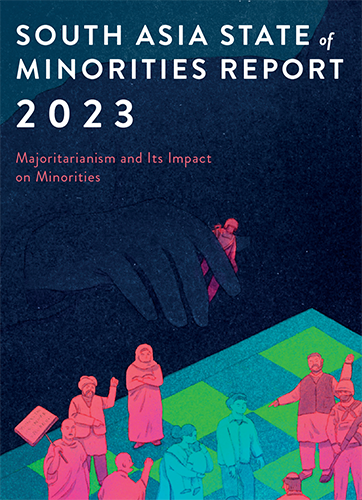
Happy reading!
The South Asia Collective team