

Greetings from the South Asia Collective! We are a network of human rights activists and organisations from across South Asia. We’ve been working since 2015 to document the condition of the region’s minorities, and to help develop capacity among grassroots-level organisations focused on human and minority rights.
We are pleased to bring to you the 13th edition (2024/3) of our Online Bulletin, where we provide an overview of recent human rights violations against South Asia’s minorities, and news of other minority-related developments. This edition covers the period between September and December, 2024.
Our Bulletins are put together by research and documentation team from Afghanistan, Bangladesh, India, Myanmar, Nepal, Pakistan, and Sri Lanka.
We have been reporting on developments related to key rights enshrined in International Human Rights Law (IHRL), encompassing civil & political rights, as well as economic, social & cultural rights, and closely monitor the various abuses and violations against minorities in South Asia. Our reporting and presentation will be guided by IHRL.
While our primary focus is on religious minorities (and micro-minorities), our teams will also cover ethnic, caste, gender, and sexual minorities, as well as indigenous peoples. The Bulletins utilise mostly secondary sources of data. These include international and domestic media outlets, as well as other civil society-led documentation efforts. Occasionally we use primary sources, using interviews with victim, witnesses, and other relevant individuals. Although updates from these sources undergo internal verification, we do not disclose their details due to security reasons.
In a region where the bulk of targeted violence incidents go unreported, our Bulletins are not intended to provide an exhaustive list of violations. Our aim is to establish a record, draw out patterns, highlight trends, and contribute to processes aimed at awareness, prevention, and accountability.
Previous bulletins are available here.
Highlights of the period under review
Links to the country sections: Afghanistan, Bangladesh, India, Myanmar, Nepal, Sri Lanka
During the period under review, (September to December 2024) a range of violations of physical integrity rights, individual liberties, and social, cultural and economic rights across the region, particularly affecting religious, ethnic, and gender minorities, were reported. Amidst widespread discrimination, violence, and state-led repression in Afghanistan, Bangladesh, India, Nepal, and Sri Lanka, this bulletin also outlines few positive developments. Following are the highlights of the bulletin.
Physical integrity rights
Violation of physical integrity rights in the region were evident in persistent discrimination and violence against minorities, often fuelled by state and non-state actors. Afghanistan under Taliban regime witnessed public floggings and continued arbitrary detention, particularly against journalists, human-rights defenders, and religious minorities. Advocates of women rights and minority groups, particularly Hazaras, faced severe persecution. Similarly, in Bangladesh, Ahmadiyya Muslims and Hindus faced arbitrary arrests, where the physical integrity and human rights of religious minorities are threatened through the use of state power. While police brutality against minorities remained widespread in India, anti-minority targeting by Hindutva actors, especially during religious festivals, further fuelled violence. Hate crimes, communal violence, arbitrary detention and arbitrary deprivation of life were rampant in India. Myanmar witnessed deadly airstrikes, bombings, and artillery attacks, killing hundreds of civilians and displacing thousands. Transgenders and Dalits faced severe discrimination in Nepal, often being pressurised to withdraw complaints to maintain social harmony. Although, we were unable to cover the detailed developments from Pakistan, there has been a troubling rise in religious intolerance and violence linked to blasphemy accusations in the month of September. Incidents include the killing of Syed Khan, a blasphemy suspect shot by police in Quetta, and the death of Dr Shah Nawaz in police encounter after he surrendered. Both cases reflect the escalating risks faced by blasphemy accused, often resulting in extrajudicial killings. Educationists and rights activists have highlighted growing religious intolerance, and the harmful impact of hate content in education and emphasised greater political inclusiveness for religious minorities to combat these issues. Sri Lanka’s use of Prevention of Terrorism Act (PTA) encouraged arbitrary detentions often targeting human-rights defenders. In addition, lack of accountability for perpetrators, whether state or non-state actors, politician’s use of exclusionary rhetoric, further exacerbating the marginalisation, and weak enforcement of legal protection were the common issues across the region, highlighting a broader trend of state-led oppression and societal marginalisation.
Individual liberties
Recent developments across the region underscore alarming trends in the protection of individual liberties. Afghanistan’s escalating repression of freedom of assembly, expression, and association is reflected in Taliban’s enforcement of strict moral codes, restricting social and cultural gathering. Targeted repression, such as unexplained poisoning at religious school, shows a broader insecurity. While incidents of temple vandalism and attacks, land disputes, and violent protests related to religious identity were reported from Bangladesh, India’s stringent anti-conversion and cow protection laws have continued to target Muslims and Christians particularly, with numerous prosecutions reported in Uttar Pradesh. Tensions have escalated in India also due to attacks on mosques and legal challenges to the ownership of these properties. Similarly, continued call for a Hindu nation and abolition of secularism has fuelled religious polarisation in Nepal. Consistent pattern of rising religious intolerance has intensified the religious minority’s vulnerability to violence, persecution, and marginalisation, particularly in Afghanistan, Bangladesh, and India.
Discrimination in access to economic, social and cultural rights
Violation of economic, social, and cultural rights are persistently affecting ethnic and religious minorities across the region. Taliban’s continued harsh restrictions on women’s rights, limiting their access to education and professional opportunities reflect gender-based discrimination and systemic exclusion in Afghanistan. Similarly, cultural suppression and violation of minority’s social, cultural, and economic rights were seen in language restrictions and seizing of books that contradict their ideology, with particular targets being texts related to Shia Islam. While notable drop in Hindu representation in civil service exam result was reported from Bangladesh, reflecting institutional discrimination, arbitrary home demolitions, targeted harassment in public were found in India to be exacerbated by policies that fuel anti-Muslim discrimination. In Myanmar, the enforcement of a military conscription law has caused widespread migration, labour shortages, and increased child labour, worsening the country’s economic crisis. Nepal’s deep-rooted caste-based discrimination was reflected in deprivation of Dalits in access to basic services compared to non-Dalits. On the other hand, minority groups particularly, Malaiyaha Tamils, were affected in Sri Lanka because of the persistent ethnic and social marginalisation. This group continued to face neglect despite political promises, regarding land rights and tenuous land ownership in the plantation sector. Moreover, women in Sri Lanka working in tea estates were subjected to poor living conditions and harassment. The indigenous Vedda community’s struggle for access to forest and their traditional ways of life, also highlights the broader cultural and livelihood issues.
Other major developments
In Afghanistan, women and minority group’s basic rights are threatened with the Taliban’s oppressive policies as seen in the reports of escalating violence from Islamic State-Khorasan Province (ISIS-K) and persecution of the Hazaras. Despite international calls for accountability in addressing these abuses, there has been little progress. The political turmoil in Bangladesh combined with propaganda efforts, especially from across India, exacerbated the ethnic and religious differences, misrepresenting the political unrest. The situation was not any different in Sri Lanka, where lack of Muslim representation in the cabinet and the debate over Muslim Marriage and Divorce Act persisted. Despite this, however, Sri Lanka has witnessed an improvement regarding the political involvement and representation of women and members of the LGBTQIA+ community such as a new politician committing to transgender rights. Meanwhile, communities belonging to indigenous groups in Nepal have been continually demonstrating against the construction of a cable car in their sacred ancestral lands, fearing environment and cultural harm, which has caused the frequent clashes in the area.
The struggles for political representation, cultural preservation, and human rights were seen across the region, underscoring the need for greater accountability, inclusive governance, and the protection of religious and gender minority and indigenous ethnic groups.
Other announcements
The 2024 edition of SAC’s flagship annual South Asia State of Minorities (SASoM) Report will examine Economic, Political and Social Participation of Minorities in South Asia. The report will contain chapters from Afghanistan, Bangladesh, India, Myanmar, Nepal, Pakistan, and Sri Lanka. Ahead of the launch of the report, scheduled for March 2025, SAC is exploring interventions focusing on justice and accountability on one hand and promoting dialogue and diversity among stakeholders on the other. Organisations and individuals seeking to collaborate with us towards these efforts are requested to email us at sac@thesouthasiacollective.org with suggestions and proposals.
SAC published a statement condemning the grave human rights violations of religious minorities in Bangladesh and the spread of misinformation and disinformation, following the political unrest. The statement is available here.
SAC also published a joint statement denouncing violence, hate speech, and discrimination against minorities in South Asia, in a year when elections are taking place in several countries. The statement is available here.
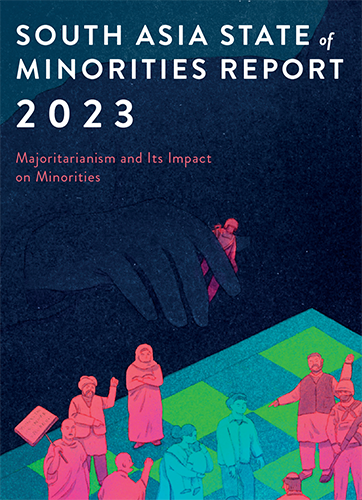
The 2023 edition of the SASoM Report remains available for free download here. The recording of the launch event is available here. The report focused on Majoritarianism and Its Impact on South Asian Minorities.
Happy reading!
The South Asia Collective team